Showing posts with label Ancient Egypt. Show all posts

Wednesday, 5 February 2014

Are There Any More Undiscovered Royal Tombs in The Valley of the Kings?


Aten wants gold, more gold and more gold.  And then he has to work out how to make the fuel he desperately needs so he can get back to conquering the Universe with his Uncle Lucie.  While he tries to work out how to get into the massive treasure vaults beneath Karnak Temple, he sets up a little tomb robbing ring.  Aten’s goal is to find intact royals tombs brimming with gold treasure.  Finding an intact royal tomb in the Valley of the Kings is also the dream of many Egyptologists today.  But was the tomb of the boy king Tutankhamen the last big discovery that the Valley of the Kings will yield or are there more amazing finds just waiting to be unearthed?

The discovery of the tomb of a minor pharaoh from the end of the 18th dynasty in 1922 by Howard Carter and Lord Carnarvon rocked the world.  Never before had an almost intact pharaoh’s tomb been found in the Valley of the Kings, and this discovery gave us not only fabulous treasures but a great deal of valuable information on the end of the Amarna period. But is the boy king’s tomb the last great discovery to be made in the Royal Necropolis or are there more undisturbed tombs hidden in the cliffs and valley floor waiting to be found?

Valley of the Kings Excavations
Excavation in the Valley of the Kings - November 2008


That there are many tombs yet to be unearthed in Egypt has been amply demonstrated over the last few weeks.  In Abydos, the sacred heart of Ancient Egypt, a huge quartzite sarcophagus discovered a year ago has been identified as belonging to an obscure pharaoh of the 13th dynasty called Sobekhotep I,  leading to the discovery close by of the tomb of a previously unknown king.  Hieroglyphs painted on the tomb walls gave his name as Senebkay.  And just around the corner from the Valley of the Kings at el-Khokha, a beautifully painted tomb of a courtier from the Ramesside Period is being excavated.  The tomb belonged to the Chief Brewer of the Temple of Mut called Khonsu-em-heb and the exquisitely painted frescos show him and his wife Mutemheb feasting and making offerings to the gods. So could there possibly be more royal tombs waiting to be found in the Valley of the Kings?


The first burial in the arid, remote valley was a departure from tradition.  In earlier dynasties, pharaoh’s tombs had been built in plain sight as a sign of their power and prestige.  From the earliest mastaba tombs to the pyramids, these tombs were as large and lavish as the pharaoh’s treasury and length of his reign allowed.  Even as late as the 17th dynasty, pharaohs were buried in small pyramids at Dra’ Abu el-Naga, a necropolis in the Theban hills. So why did a high court official called Ineni dig a rock cut tomb for his royal master, boasting ‘alone, no one seeing and no one hearing’?  Possibly because it was becoming obvious that most of these ostentatious, very visible tombs were being entered by tomb robbers, who stole the precious funerary treasure and ripped the pharaoh’s mummies apart looking for amulets and jewellery.


Valley of the Kings, Luxor, Egypt
Valley of the Kings

But although it might have been possible to conceal the location of one royal tomb, as successive pharaoh’s carried on digging their tombs in the same valley, the site of the royal necropolis became well known and a workmen’s village was built at Deir-el Medina to house the men who dug and decorated these fabulous sepulchres.  To date sixty four tombs have been found in the Royal Valley, belonging to queens, royal children and favoured courtiers as well as the mighty pharaohs themselves.  So who is missing?  Which pharaoh’s tombs have not yet been found?  The two main contenders are Thutmosis II from the early 18th dynasty and Ramesses VIII from the 20th dynasty.  The mummy of Ramesses XI has also not been found and though a tomb was dug for him in the Valley of the Kings, there is no evidence he was actually buried in it. Most of the tombs of the queens from the 18th dynasty have also not yet been located and there may also be smaller tombs of princes, princesses and royal officials still awaiting their turn to be discovered.


In 2007 Dr Zahi Hawass appointed an Egyptian team of archaeologists headed by Afifi Rohiem to start excavating in parts of the Royal Valley where he believed there might be a new tomb.  At the same time the Glen Dash Foundation for Archaeological Research undertook thorough ground-penetrating radar investigations of the cliffs and valley floor.  The Egyptologists worked between 2007 and 2010, starting with the area around the tomb of Merenptah.  Their excavations rediscovered some ancient graffiti first recorded by Jaroslav Czerny and the remains of some workmen’s huts, which have been carefully recorded.  Tantalisingly, one of the ancient graffito was written by an official called Userhat who said that he had created a burial for his father close by.


The Egyptian found two cuttings in the rock that could be tomb entrances, one where the rubble has been disturbed, suggesting that whatever is there has already been disturbed, and one where it had not. Could this be the entrance to an intact tomb?  These two new tomb entrances became known as KV64 and KV65.  The KV64 entrance was found close to Merenptah’s tomb and is Ramesside in appearance.  It was thought this could possibly be the entrance to the tomb of Pharaoh Ramesses VIII. The other tomb entrance was cut and in the style of the 18th dynasty and Dr Hawass stated in a lecture that he thought this could be the tomb of an individual from the Amarna period and that some debris has been excavated that had the name of a previously unknown queen on it.


However, for some reason no further investigations of these tomb entrances were undertaken, possibly they were halted by the civil unrest that started during 2011. In January 2012 a team from the University of Basel in Switzerland stumbled across a new tomb in the valley completely by chance.  When they opened it they found it contained the undisturbed coffin and beautifully wrapped mummy of a temple singer called Nehmes Bastet dating from the 22nd dynasty. The tomb, now officially designated as KV64, was not originally built for her but had been usurped from an earlier period. The inscriptions show that Nehmes Bastet was the daughter of the High Priest of Amun, so are there more burials from this family and period still awaiting discovery in the Valley?


So there is a strong chance there are still some major finds to be made in the Valley of the Kings. KV63 is now thought to have been more of a storage chamber for burials of the Amarna period, rather than a royal tomb.  Most of the burials of the royal ladies of this period have not yet been located and finding the tomb of one of the major figures, such as the iconic beauty Queen Nefertiti, would be very exciting and help to clarify what really happened during this shadowy part of Ancient Egyptian history.  The mystery tomb KV55 could be the tomb of the heretic Pharaoh Akhenaten or his ephemeral successor Smenkhare, so is either of these king’s tombs still concealed in the cliffs somewhere?


Valley of the Kings Luxor - west branch
Western Branch of the Valley of the Kings


We also still do not know the complete family tree of the pharaoh’s or of their court officials, so there could be tombs to be discovered that belonged to queens, royal children, ladies of the harem or nobles we have never before encountered in Egyptian history.  Also all the tombs visited by tourists are in the eastern branch of the Valley of the Kings.  There is a western branch that contains the tombs of Amenophis III and Ay that is rarely visited and has not yet been thoroughly surveyed or excavated. But although a tomb stuffed full of golden treasure would captivate the media and the public the world over, any find, however small, adds to our knowledge of our ancient past and fills in another piece of the puzzle.


Sources: Wikipaedia, BBC News

Sunday, 11 August 2013

The Importance of Gold to the Ancient Egyptians

In The Aten Sequence Books, our hapless main character Aten is desperately trying to get his hands on enough gold to make more fuel for his ship, so that he can blast off back into space and join his evil Uncle Lucie in conquering the Universe.  After trying out a few options, such as the Bank of England in Victorian London, he decides the Temple of Karnak during the reign of the fabulously wealthy Pharaoh Amenophis III is his best bet.  Now this is pure fiction, but the Ancient Egyptians were famous for the amount of gold they possessed, so why was it so important to them?


“And gold – everywhere the glint of gold” - Howard Carter on what he saw as he opened the tomb of Pharaoh Tutankhamun in the Valley of the Kings.


Cobra Details on Tutankhamun's Gold Throne


Most people when they think of Ancient Egypt think of gold.  Ever since the glittering tomb of the boy king Tutankhamun was excavated in 1922, we have associated the mysterious land of Egypt with untold wealth and glittering treasure. It seemed as though every exquisite piece of funerary equipment removed from the tomb was gilded in the precious yellow metal or even made entirely of solid gold, like the famous funerary mask and inner coffin.  And if this was the treasure placed in the tomb of a relatively insignificant pharaoh who only ruled for a few years and died young, what wealth could the tombs of the mighty kings such as Ramesses the Great and Thutmosis III have contained before they were robbed?

But why was gold so important to the Egyptian pharaohs?  It was not a precious metal used by the ordinary people; it was reserved for the exclusive use of royalty and important nobility.  Domestically it had no economic value, as barter was used for trade and all servants of the crown were paid with food, fuel and gifts.  

Money was not used in Egypt until the Ptolemaic period, so gold was not used in coins. One of the reasons it was so highly prized was that it was associated with the dazzling light of the sun and the solar deity Ra.  It was believed that the very skin of the gods was golden and that their bones were composed of silver.  Because it is a precious metal that does not tarnish and is fairly indestructible it was also associated with eternal life.  The pharaoh was viewed as divine, the human link between the earth and the numinous, so gold was used for royal coffins and funerary equipment to help preserve the king’s mortal remains for eternity.


It was in international trade that gold became important, and Egypt became famous for the amount of the prized precious metal that it sent to all corners of its far flung empire.  It was not only used for trade, it was also an important diplomatic tool as pharaohs would send quantities of gold and gilded treasures to their allies and vassal monarchs in order to keep them happy and fighting to maintain Egypt’s borders. 

So used were these vassal kings to having a continuous flow of gold being sent out to them that they would write and complain if there was any disruption in supply.  In the late eighteenth dynasty King Tushratta of Mitanni wrote to Queen Tiye to moan that her husband Amenophis III was only sending gilded statues not the solid gold ones he had apparently promised:
I have asked Mimmuriya, your husband, for massive gold statues.  But your son has gold-plated statues of wood.  As the gold is like dust in the country of your son, why have they been the reason for such pain, that your son should not have given them to me?

Gold was also given as rewards to courtiers and military leaders.  Reliefs at Amarna show the royal couple Akhenaten and Nefertiti handing out golden collars and arm rings to their faithful followers and large flies fashioned from gold were handed out for valour on the battlefield, much as we give out medals today. Interestingly these military awards were sometimes even presented to women, as Queen Aahhotep I, the mother of Pharaoh Ahmose I, was buried with three such flies in her tomb.

As the wealth and might of the Egyptian empire grew in the New Kingdom, so did the prestige of goldsmiths.  The men who created the exquisite jewelry, statues and funerary masks became feted and wealthy in their own right.  They developed several techniques that are still used by jewellers today such as utilising the lost-wax technique to make intricate statues, beating gold into fine leaves, and mixing it with other metals to create alloys.  

Electrum, a blend of gold, silver, copper and other metals, was one such alloy that was very widely used to plate the exterior of monuments such as obelisks and the pyramidions that topped the pyramids.Gold had been mined and worked in Egypt since predynastic times. How it was first discovered is shrouded in mystery, but this very early gold was more than likely extracted from alluvial deposits. 

It was one of the first metals to be worked and used by prehistoric man, probably because it could be found in the natural world that surrounded them, is very malleable and soft so can easily be worked with rudimentary tools, and its shine and glitter would have made it attractive for use in jewelry and ornaments.  Most of the gold extracted in antiquity in Egypt was mined in the Eastern Desert and Nubia. In fact Nubia even incorporates the ancient word for gold ‘nub’ in its name.


  Ay receiving rewards of gold from Akhenaten & Nefertiti
Ay receiving rewards of gold from Akhenaten & Nefertiti

All of the mines in Ancient Egypt were state monopolies and were worked predominantly by prisoners and slaves.  According to the writings of the historian Diodorus Siculus in his Bibliotheca historica written around 60 BCE these unfortunate souls were treated very badly; being made to work in appalling conditions, with little food or water and being beaten if they weren’t thought to be working hard enough.

The methods of extracting the metal were simple but effective. The earliest method used was probably extracting gold from auriferous sand, which was known in antiquity as nub-en-mu or  ’gold of the river’.    Quantities of auriferous sand would be placed into a sack made from an animal fleece, with the woolly side facing inward.  Water would then be poured into the bag and vigorously shaken around by two men.  This would separate the heavier metal from the dirt and grit and when the water was drained out, it would take the dirt with it leaving the gold dust adhering to the fleece.


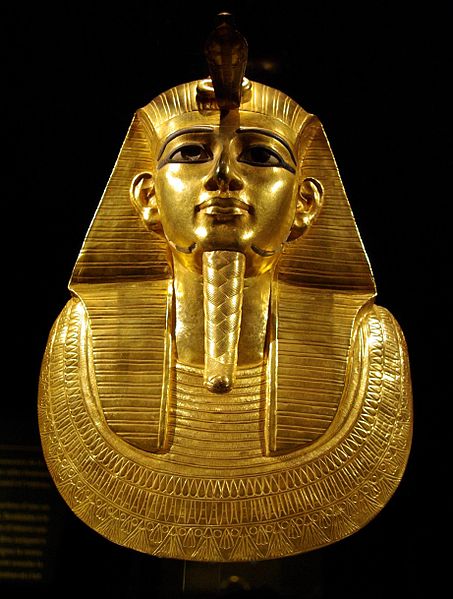
Funerary Mask of Psusennes I
Shallow underground mining probably didn’t start until the New Kingdom and this technique of extraction was known as nub-en-set or ‘gold of the mountain’.  The metal bearing rock was first crushed into powder and then spread over a stone table that was slightly tilted.  Water was then poured over the powder, which separated all the dirt and dust from the metal, leaving only the particles of gold on the table.  

This was repeated a few times until only gleaming, yellow metal particles remained.  They then rubbed these precious particles between their hands for a length of time, before they finally ran small sponges over it to clear out any remaining dirt.


So far there have been over a hundred gold workings and settlements that have been found, most of them in the arid wadis of the Eastern Desert.  However, according to the map on the Turin Papyrus, there were at least 1300 such mines in ancient times.  Hopefully, more evidence and remains of the ancient gold mining industry will be excavated from beneath the sands of Egypt, as well as further beautiful examples of the ancient goldsmith’s art.


Psusennes I image Lazaroni Wikimedia Creative Commons Attribution 2.0 Generic
Ay gold rewards image ddehisen Wikimedia Creative Commons Attribution 2.0 Generic
Gold Cobra image External Radiance Wikimedia Creative Commons Attribution Share-Alike 3.0 Unported

Monday, 29 July 2013

'I Was Really Going Places You Know' - The Lament of Tuy

Tuy is one of the important female characters in The Aten Sequence Books, efficiently looking after the practical side of Aten's life at the villa, while at the same time being a sarcastic thorn in his side.  But she too has her story and her dreams, and being stuck on Earth with Aten had very definitely never been part of her plans.

Deir el Bahri


‘I was really going places you know,’ Tuy gulped, as two fat teardrops formed in the corner of her eyes and slowly tracked their way down her flushed cheeks.

‘I had plans, I had dreams, I was really going places.  And now look at me?  Stuck here in this hot, dusty hellhole that doesn’t even have a proper power supply.’

The guard cat broke off from his morning ablutions to fix her with his enigmatic feline stare.

‘Don’t look at me like that.  It’s not my fault that the only thing I’ve got to talk to is a cat.  At least you don’t answer back, which is more than I can say for some of them round here.’

Tuy flung the onions she had been peeling into the bowl with unnecessary vigour and turned around to fetch the goose that was hanging on the wall behind her.

‘And don’t think that I don’t know what you are up to?  If you put so much as one paw on this goose carcass, you’ll be going into the pot with it.  Don’t think I don’t know where that stuffed carp went last week.’

The guard cat looked mildly offended at this insinuation and returned to lovingly licking his front leg.

‘See, even you don’t take me seriously,’ Tuy wailed, as fresh tears started tumbling down her face.

‘But you don’t know; none of you know. I was really going someplace, someplace special.  I was the only one out of my clutch to even make it external processing and do you know how many get through and are given an exit permit? Only 2%!  I was in the top 2% of my clutch and look at me now?  A single mother stuck on a backward planet I don’t even know the name of.  Motherhood was never what I wanted, especially not at my age. And what am I going to do with him? There aren’t any opportunities for a young Galasian here and it’s no life for him stuck in that shed all day.’

The guard cat switched to cleaning his other front leg without even looking up to acknowledge Tuy’s distress.

‘He needs to be out in the fresh air, running and playing with the other youngsters. Not shunned for being different and locked away as if he were a monster.’

These words did cause the guard cat to temporarily interrupt his washing and look up at Tuy with an air of disbelief.  His sensitive nose could detect the rank odour of Piy locked up in his shed, even this far away in the kitchen, despite the strong tang of onions that was in the air and the gamey scent of a goose that had been hanging for a long time.

‘And it wasn’t just the exit permit I got.  I was one of only seven hundred and twenty females to be admitted into the Galactic Cocktail Shaking School on Mildorium 27.  Can you even begin to imagine what an achievement that was?’

The guard cat yawned delicately and turned around to lick his nether regions.  When would the tedious woman shut up?  At this rate she would never turn her back, so he could get at that goose.  She might think she had a hard life down here, but really she had no clue as to what he had to go through just to get the odd mouthful of food occasionally.  And cocktails? Really? She would have been better off going to a good mousing academy, though god knows how many small rodents she would have to kill every day to keep that malodorous turnling of hers fed.

Medinet Habu


‘It’s bad enough that you ignore me when I’m trying to talk to you, but do you have to wash your private parts on my kitchen table?” she asked him irritably.  ‘And how come you can’t talk like those royal cats can?’

If the guard cat had eyebrows he would have raised them in disbelief. Why on earth did the woman think he would talk to her? Having to listen to her rants as he was waiting for food was bad enough.

‘I was great at the cocktail shaking school; one of their fastest learners ever.  By the time I graduated I could mix over fifteen hundred cocktails from fourteen different planetary systems.  And did you know that I was one of only eight thousand graduates ever licensed to use slieppel juice from Grandorminian 75?  That stuff can fell a Lotkair Sloth with just two drops.  I had my pick of jobs.  I really thought that bar in the mining belt was going to be the first step in a glittering career.  It was just oozing with rich miners and droids, all with plenty of cash in their pockets and out for a good time.  The tips were fabulous.  Did I tell you the story of the night that tulsphate miner dropped a 560 carat diamond in my cleavage?

The cat elegantly stretched and then curled up into a ball of mackerel striped fur.  Was the woman going to rant all night?  What he really wanted was to have a quick nap, but he could almost guarantee that as soon as his eyes were closed that goose would be put in the baking pot and he would have lost his chance. But it couldn’t hurt to let the woman think he was asleep.

He could hear that Tuy had started plucking the large bird.  Time was running out and, in the mood she was in, he wasn’t sure he wanted to be around when she started to chop it up with her cleaver.

‘You can ignore me if you want, but I’ve still got my story.  That tulsphate miner loved me you know.  Said he’d take me on his next prospecting trip and buy me anything I wanted. Oh why did Aten have to come into my bar that night?  There were seventy five others on that strip. I mean it’s not like I ever fancied him or anything, but I’d never met one of the immortal ones before.  It’s not often a girl gets a chance to party with a member of the First Families.  He offered to show me his space ship and the next thing you know we’ve run out of fuel in the middle of nowhere. ‘

The guard cat curled up even tighter in the hope the woman would take the hint and stop talking.  Tuy, however, was just getting into her stride.

‘I mean how does one of the immortal ones do something that stupid?  They’re supposed to be role models for us, right? People we can look up to, not incompetent idiots who run out of fuel and then don’t know how to fix the problem.  If I’d known that I was going to be stuck sweeping and cooking in a scratchy linen robe and too much eye make-up I would have just stayed on the home planet.  I could have raised several clutches by now, not just one turnling.’

The guard cat could feel himself gradually dozing off.  His was so sleepy he felt like his head had been stuffed with cotton wool.  The woman’s voice now just sounded like a constant drone in his head and she wasn’t showing any signs of stopping any time soon.  If he wanted that goose he would have to do something drastic.

There was only one thing he could think of that was guaranteed to get her out of the kitchen in a hurry, leaving his coveted prize unattended.  So he slowly reached out his mind, probing until he found the wooden door of the shed Piy was locked in.  He could sense the Galasian turnling impotently hammering at the rough wooden slats trying to get out, so he pulsed some energy into the stout piece of rope that was holding the door closed.  After a few seconds it ignited in a blaze of hot, blue flames that rapidly burned through the rope. The next time Piy’s fist hit the door it swung abruptly open.

Any time now thought the guard cat smugly, as he started counting down from ten.  Ten, nine, eight, seven ....... Suddenly, a loud female scream, followed by the guttural roar of a Galasian turnling shattered the late afternoon silence that had been hanging over the villa.  More screaming and the sound of running feet followed.

Tuy, her tearful rant rudely interrupted by the commotion, angrily slammed the half-plucked goose back down on the table in a cloud of grey and white feathers.

‘Not again,’ she screamed. ‘How did he get out this time?  And why are those stupid girls screaming, it’s not like he’s anything to be scared of. I suppose I’m going to have to go and sort it out.  Not like anyone else is going to.’

She quickly wiped her hands clean on the scrap of linen she used as a towel and ran out of the room in the direction of the screaming.

The guard cat waited until he could hear her footsteps pounding down the verandah, before he lifted his head and looked at where the goose was now lying on the kitchen table.

These humans think they are so clever, he thought as he dragged the large bird off the table and out into the courtyard.  Now he could have his dinner in peace in his special hiding place behind the dung heap, have another leisurely wash and a good long sleep.

Thursday, 6 June 2013

Introducing ‘Hall of the Golden Crocodiles – The Aten Sequence 2’

It always felt a little strange talking about a series of books when there was only one available, but at last there is actually an Aten Sequence!  It feels like it has been a long time coming, but the second book in the series ‘Hall of the Golden Crocodiles – The Aten Sequence 2’ has now been self published and is available as an ebook on Amazon Kindle, ibookstore, Barnes & Noble, Reader Store (Sony), Kobo, Copia, Gardners, Baker & Taylor, eBookPie, eSentral, and Scribd.

The Temple of Karnak


In this second book in the series, we find our immortal friend Aten getting ever more desperate.  He is very close to running out of fuel and, now that the High Priest Neferhotep is even more suspicious of him, it looks like his chances of getting at the gold stored in the vaults beneath the Temple of Karnak are even slimmer. As taking responsibility is not his style, he blames his travelling companions the half man/half basset hound Druitt, the tempestuous Galasian cocktail waitress Tuy and Luke the rebel teenager from the 21st century for all his troubles.

So he sends Luke and Neferptah back to the palace to be educated in the Kap, a military training school for the royal princes and nobles, with Prince Dhutmose and his pals, in the hope that they will be able to find a way into the temple for him. Of course he neglects to tell the boys that’s why they are there and eventually has to blackmail Luke into going in search of the Princess Merytamen, in the hope that she will be able to lead him to his goal.


So once again the two boys find themselves stealing through the palace corridors in the middle of the night, desperately hoping they will not be caught.  But their pursuit of Merytamen sets off a chain of events that eventually leads them deep into the tunnels and halls beneath Karnak, on a dangerous quest to find the princess.  As their friends from the palace try and find them before they are missed and Aten follows them in hot pursuit of the gold, can the two boys survive the dangers that lie before them?

Because there are ancient spells protecting the darkened corridors and vaults of the temple; powerful magic that can only too easily be awakened by unwary trespassers in this most sacred part of Karnak.  There is also the little matter of an irate High Priest, who is a powerful magician in his own right and who would do anything to keep them away from the princess, to contend with.

The Temple of Karnak


Hall of the Golden Crocodiles is a light hearted science fantasy novel suitable for both young adults and older readers, featuring all of your favourite characters from Pharaoh’s Gold. There are also some exciting new characters for you to meet such as the talking royal cat Ta-miu, Prince Amenophis’s creepy new friend Mahu and the tomb robber Parneb.  But it is someone from Aten’s past that causes the biggest surprise; a new arrival that could make his life even more complicated.


So will Aten get the gold he so badly needs and manage to make enough fuel to leave Earth and join his Uncle Lucie at last?  Or will all his plans just fall apart again, leaving him stuck forever?  Whatever happens, you can bet that none of it will be his fault and that there will be plenty of adventures along the way.


Download your copy today to find out!


Sunday, 2 June 2013

In Search of the Historical Prince Dhutmose

The Aten Sequence Books are set in Ancient Egypt and although many of the characters are purely fictional, I have ‘borrowed’ some real historical characters and woven them into my stories.

One of these characters is Prince Dhutmose; Crown Prince and eldest son of Pharaoh Amenophis III.  In the books he is a young prince undergoing his military training in the Kap, a training school for the young boys of royal and noble blood.  At the beginning of the story line he is just a young prince having a good time hunting, racing his chariot, wrestling and having fun with his friends before Aten shows up and embroils him in his schemes to steal the gold from the vaults of the temple of Karnak.  In the second book, ‘Hall of the Golden Crocodiles’, we also meet Dhutmose’s beloved pet, the cat Ta-miu who, being a royal cat, can talk, do magic and is much more than she seems. So what can history tell us about the real Prince Dhutmose?

Sarcophagus of Prince Thutmose's cat Ta-miu - Egyptian Museum Cairo
Sarcophagus of Prince Thutmose's cat Ta-miu


Although we do not know a great deal about the historical Prince Dhutmose, isn’t it amazing that we do know that just over 3,000 years ago a young prince loved his cat?

For all our knowledge of ancient civilisations, we rarely catch even the faintest whispers of the personal, intimate lives that these people once led.  Even for royalty, beyond the formal inscriptions that rulers used to trumpet their achievements or show their reverence to their gods, we usually know very little about the real characters beneath the glittering regalia and formality of court life.

But just occasionally we do get a small glimpse into these past lives and loves, and one of these rare glimpses comes from a young boy’s love for his cat. Prince Dhutmose was so fond of his cat that he had a fine limestone sarcophagus carved for her, had her body mummified and then carefully buried. The limestone sarcophagus is now on display in the Egyptian Museum in Cairo and shows the cat sitting before an offering table heaped with goodies for the afterlife.  It seems that her owner wanted her to enjoy her time after death as much as she had appreciated being a cosseted royal pet in life.  We know from the inscriptions that she was called Ta-miu, which literally meant ‘she-cat’ and that her owner was Crown Prince Dhutmose, or Thutmose, the eldest son of the mighty Pharaoh Amenophis III and his great royal wife, Queen Tiye.


Living in the 21st century, where Prince William and Prince Harry have practically every moment of their lives captured on film and the details of their day-to-day lives endlessly scrutinised and pored over, it may seem strange to us that back in Ancient Egypt it was actually very rare for there to be any mention of royal children or even their queens, on a Pharaoh’s monuments. What we do know about the Egyptian royal families over the thousands of years of Egyptian history tends to have been pieced together from titles and inscriptions found in tombs or on statues or funerary equipment. Even today there is much speculation about some of the relationships in the Egyptian royal family and how they fitted together. However, this started to change towards the end of the 18th dynasty and Amenophis III had his wife Queen Tiye shown alongside him on statues and had the names and titles of his children carved onto some of his monuments.  However, it was still usually only the royal princesses who were mentioned and during the ensuing Amarna period the famous heretic Pharaoh Akhenaten and his beautiful wife Queen Nefertiti were often shown with their six daughters.

So the fact that we know that Prince Dhutmose even existed is a miracle, as he did not outlive his father and become Pharaoh.  Although we do not know many details of his life, he seems to have been born between years 16-19 of his father’s reign and have died young sometime between years 25-30.  His titles were listed on Ta-miu’s sarcophagus as ‘Crown Prince, Overseer of the Priests of Upper and Lower Egypt, High Priest of Ptah in Memphis and Sm-Priest (of Ptah)’, so he could well have spent much of his short life in Egypt’s ancient capital Memphis.  As he was young, we also do not know whether these titles were purely honorary or whether he did undertake priestly duties in the temple of Ptah.  However, there is evidence that he officiated at the burial of one of the first Apis bulls at Saqqara, the large royal necropolis over on the west bank of the Nile from Memphis.  He may also have had connections to the military as an ivory whip found in the tomb of the boy king Tutankhamun is inscribed with the titles ‘The King’s son, the troop commander, Thutmose, repeating of births’, although again we cannot really be sure that the whip’s owner was our Dhutmose and not another royal prince with the same name.

How Prince Dhutmose died or his exact age at death is unknown, but his demise paved the way for the emergence of his younger brother Prince Amenophis onto the political scene.  It is interesting to speculate what would have happened if the young prince had lived and had succeeded to his father’s throne.  Would he have led Egypt away from the worship of Amen and the traditional gods as his brother was to do, or did he share Akhenaten’s beliefs in the pre-eminence of the Aten?  Prince Dhutmose’s tomb has never been discovered, but there is a mummy that was discovered in the KV35 cache in the tomb of Amenophis II that has been identified by some as his remains, although others think that it may be Prince Webensenu, a son of Amenophis II, as some of his canopic jars were also found in the tomb.  The mummy is of a young boy of around 11 years of age, who still wears the sidelock of youth, and his identification as Prince Dhutmose comes from the proximity of the remains to another mummy known as the ‘elder lady’ who has been identified through DNA analysis as being Queen Tiye, his mother.

Maybe there is more evidence of Prince Dhutmose still to be excavated from beneath the shifting sands off Egypt and we will be able to piece together some more of the details of his life?  Maybe even his tomb is still out there somewhere in the hills of Thebes or in the necropolis of Saqqara waiting to be found?  But the one thing we do know is that the young prince dearly loved his cat.


Sarcophagus of Prince Thutmose's cat Ta-miu image, Larazoni Wikimedia Creative Commons Attribution 2.0 Generic

Saturday, 6 April 2013

Egyptian Pharaoh Sneferu and His Overachieving Children


The fourth dynasty Pharaoh Sneferu is alluded to in the first two books of the Aten Sequence, because he was regarded by later Egyptians as a wise and benevolent ruler.  But this Old Kingdom Pharaoh has a much larger part to play in the third book of the series, but you will just have to wait until it is released to see how Luke and Neferptah get into trouble with a long dead ruler.

Have you heard of the Pharaoh Sneferu? There have been powerful royal families and dynasties throughout history, but if we travel back to Ancient Egypt’s Old Kingdom we find a family who all seemed to be high achievers and whose monuments still stand today, including one of the Seven Wonders of the Ancient World. The founder of this amazing family was the Pharaoh Sneferu, who was also the first king of the 4th dynasty.  Sneferu’s own parentage is still disputed.  Some scholars think that his father was his predecessor and last king of the 3rd dynasty, the Pharaoh Huni and that his mother may have been one of the lesser wives or concubines of Huni called Meresankh. Sneferu was the pharaoh who brought pyramid building in Egypt to its full fruition and remarkably built three major stone pyramids during his reign, the Meidum pyramid and the Bent and Red pyramids at Dashur.  

Red Pyramid of Sneferu at Dashur - own image
Red Pyramid of Sneferu at Dashur


He was a pharaoh who was also admired by later Ancient Egyptians for being a wise and benevolent ruler. He had several wives and many concubines, as was the custom in Ancient Egypt and his Great Royal Wife is believed to be a lady called Queen Hetepheres I. Hetepheres I was probably a daughter of Huni and therefore may have been Sneferu’s half sister, but marriages between brothers and sisters or even fathers and daughters were common in the royal family of Ancient Egypt.  To a certain degree the succession of the Egyptian crown was matrilineal, as the next Pharaoh tended to be the son of the Great Royal Wife or a wife of royal blood. These marriages were entered into to ensure that the succession to the throne remained within the immediate royal family and marrying his close female relatives strengthened a king’s position and power immensely.


So you would think that having as mighty a Pharaoh as Sneferu for a father would be a hard act to follow?  Well his kids did not seem to think so, as it was his son Khufu who succeeded him as pharaoh and went on to build the Great Pyramid at Giza, a miracle of ancient engineering. Khufu was a son of Sneferu’s Great Royal Wife Hetepheres I and was not remembered by later generations as benignly as his father, as he goes down in folklore as being a particularly cruel and implacable ruler. The length of time a pharaoh ruled is often disputed by scholars, but it is believed that Khufu ruled for around 23 years.

Apart from his amazing achievement of building the Great Pyramid of Giza as his tomb, it is believed that he led expeditions into Nubia, the Sinai and Libya.  The relationships of the 4th dynasty royal family have been pieced together from ancient histories, inscriptions and monuments and some of them are by no means certain and many are still been disputed. Khufu is believed to have had several royal wives, including queens called Henutsen and Meritites I and two further queens whose names are not yet known. Meritites I and Henutsen were both half-sister’s of King Khufu and daughters of Sneferu.


Khufu had many brothers and sisters and the ones that we do know something about all held high office if they were men, or married powerful courtiers if they were women. Khufu was not, in fact, Sneferu’s eldest son, even though he succeeded him on the throne.  According to inscriptions, the eldest son was Prince Nefermaat I.  Nefermaat I’s mother is unknown, but he was the acknowledged Crown Prince as well as holding some other impressive titles such as Vizier, Seal Bearer and Prophet of Bast. Nefermaat I was married to a lady called Itet and they were both buried in a mastaba tomb at Meidum that is famous for being where the glorious tomb painting known as the ‘Meidum Geese’ was found.  They had a very large family, but possibly their most famous son was Hemiunu who was credited with being the architect of his Uncle Khufu’s Great Pyramid at Giza.

Prince Ankhhaf was another younger half-bother of Khufu.  We do not know who his mother was, but he married his half sister Hetepheres, who was a daughter of Hetepheres I. He served as Vizier under his nephew the pharaoh Khafre, who was a son of Khufu and Henutsen. He was buried in a large mastaba in the eastern cemetery at Giza and a particularly fine statue of him can be seen in the Boston Museum of Fine Arts.

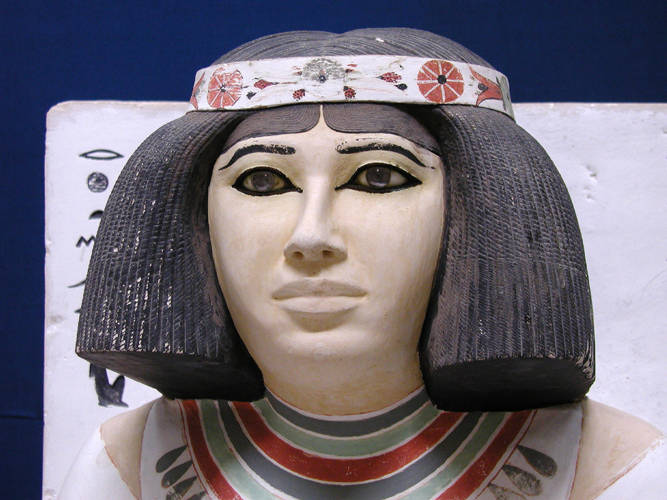
Another son of Sneferu and half-brother of Khufu is Rahotep, who was the High Priest of Re at Heliopolis.  He was married to a lady of unknown parentage called Nofret and they were buried in a mastaba tomb in Meidum. There is a very beautiful and lifelike painted statue of this couple in the museum in Cairo that was excavated from their mastaba. There are also sons and daughters of Sneferu that we still know relatively little about. Ranefer is known from his mastaba at Meidum. Kanefer held the titles of Vizier, High Priest and Overseer of the Troops. His tomb is situated in Dashur, which could indicate that he died after Rahotep and Nefermaat who were buried at Meidum, as during his reign Sneferu abandoned Meidum as a his possible burial place and started building pyramids at Dashur. It is also more than likely that they all predeceased their half-brother Khufu who went on to become the next pharaoh.


Nofret Statue
Nofret Statue

There is also another known son of Sneferu called Iynefer, about whom almost nothing is known and, of course, in the future the sands of Egypt may give up evidence of the existence of further members of this talented, powerful family. There are also some other daughters of Sneferu who we know a little about, such as Nefertkau who may have been married to her half brother Khufu.  She was the mother of Nefermaat II and was buried at Giza during the reign of the pharaoh Khafre. There was also a daughter called Nefertnesu whom very little is known about other than the fact that she had a son called Kaemqued.


So you are beginning to get the picture of how everything was very much all kept within the family, so that political power, military power, administrative power and religious power were all led and directed by members of the royal family for the benefit and prestige of pharaoh and the royal family?  It is perhaps unfortunate that all we know about this dynamic, powerful family comes from the formal inscriptions they have left behind on their tombs and monuments and that we can only guess at the politics, relationships and emotions that were generated between the various members of the royal family.

We can only conjecture that the royal ladies manoeuvred and plotted to get their sons ahead in the succession and high in pharaoh’s favour and we have no idea of how the royal princesses felt when they were married to their half-brothers. Was it a peaceful happy family living in accord or a turbulent, feuding one?  We will probably never know, but we can still go and see the amazing pyramid that Khufu built on the Giza plateau and those of his descendants Khafre and Menkaure and be bowled over by the accomplishments of this ancient family of overachievers.

Nofret Statue Wikimedia Commons any purpose

Wednesday, 27 February 2013

Ancient Egypt – The Workman’s Village at Deir el-Medina


The second book in the series ‘Hall of the Golden Crocodiles – The Aten Sequence 2’ will be available to download in the spring of 2013.   In it we find that Aten is getting more and more desperate to get hold of the gold he needs so, partly to get his hands on some of the precious metal and partly to irritate his nemesis Neferhotep, he turns to a little light tomb robbing.  

Not known for getting his own hands dirty, he gets Piy to recruit some local tomb robbers from the workman’s village at Deir el-Medina to help him out. The tomb robbers will soon find that they have gotten themselves involved in something a lot stranger and even more terrifying than tunnelling into a sealed tomb in the dead of night right under the noses of the necropolis guards.  But what was the real village they lived in really like and what kind of life would these ordinary ancient Egyptian men have led?

Deir el-Medina - own image
Deir el-Medina

Deir el-Medina


Many of us find the history of Ancient Egypt fascinating with its fabulous golden treasures, pyramids, magnificent temples, pharaohs and gods with the heads of animals and birds. But how much do you know about the lives of the ordinary Ancient Egyptians? Luckily, unlike many ancient cultures, a great deal is known about the daily lives of the workers and their families of ancient Egypt, and much of this knowledge comes from a very unique site called Deir el-Medina. 

The name means ‘monastery of the city’ in Arabic, but to the Ancient Egyptians it was known as ‘Pa-demi’ which means ‘the town’ and also ‘Set-Maat’, the place of truth.  So what is this very important and unique archaeological site? Well Deir el-Medina is the remains of the village where the workmen who worked on the royal tombs in the Valley of the Kings and the Valley of the Queens lived with their wives and children. These highly skilled craftsmen dedicated their whole lives to carving and decorating the tombs of the great pharaohs, and, contrary to what a lot of people believe, they were free citizens and not slaves.

Discovery and Excavation of Deir el-Medina


The village is situated in an arid, desiccated little curve in the hills on the west bank of the River Nile at Thebes, which is now modern-day Luxor.  Like many ancient sites and monuments, the village had become lost in the sands of time. There were several finds of artefacts and papyri discovered in the general vicinity of the workmen’s village during the 19th century, but the first major excavations of the area were undertaken by Ernesto Schiaparelli in the years 1905-1909, during which he discovered large amounts of ostraca, which are large flakes of limestone that were used for writing on.

It is these ostraca that have given us such a vivid picture of the lives of these ordinary people during the New Kingdom of Ancient Egypt, as they contained notes, lists, and private letters that cover everything from official business to complaints and local gossip. A French team led by Bernard Bruyère took over in 1922 and worked on excavating the whole site until 1951, and uncovered the village with its adjacent cemetery and dumps. 

They uncovered a village of worker’s dwellings that opened out onto one main thoroughfare that cut through the middle of the town, with several smaller streets that had been added on as the town had grown. Deir el-Medina was a walled village, with the main entrance being to the north, and the well that provided the village with water was just outside the main gate. The well was not fed by a water source, but had to be filled every day by water carriers who hauled the precious water all the way from the Nile.


Deir el-Medina - own image
Deir el-Medina

The Houses of Deir el-Medina


The dwellings at Deir el-Medina are simple constructions, and the very first houses were made of mud brick and were built without foundations.  The houses evolved over time and they generally had rubble foundations and four rooms with a brick or stone basement. The houses in this ancient village had an entrance hall, a living room with raised mud-brick platforms for seating and sleeping, maybe a couple of small rooms leading off the living area for storage or for use as sleeping quarters for the women folk, and a small open courtyard for cooking and grinding grain in order to bake bread. 

Some of the houses were decorated with frescos of the gods, and many had niches for stela, statues or offering tables. There were even some child burials found underneath the floors. Deir el-Medina is probably the best preserved ancient settlement in Egypt dating from pharaonic times, and provides a fascinating insight into the daily lives of this unique community.


History of Deir el-Medina


The village first came into being during the 18th dynasty, probably during the reign of Amenhotep I, although the first dated remains to have been found come from the reign of Thutmosis I. Amenhotep came to the throne of Egypt as a young child and his mother Queen Ahmose-Nefertari was his co-regent until he was old enough to rule on his own. 

This royal pair was adopted as the patrons of the worker’s village and after their death they then became the village deities, and there is a temple dedicated to them in the vicinity of the village that stands on the terrace above the much later Ptolemaic temple.  There were many feast days during the year in which Amenhotep I’s statue, in his guise of ‘Lord of the Village’ was paraded through the streets, and their joint royal cult was known to be in existence until the late Ramesside period. 

The community was formed from the workmen and their families. They were highly skilled artisans who were better paid and more highly educated than many other ordinary ancient Egyptians. It is likely that even some of the women were literate, as they were known to have received and been sent messages, as for much of the time only the women would have been at home in Deir el-Medina, as their men folk worked long hours in the Valley of the Kings and sometimes were away overnight.

There were generally around 100 people living at Deir el-Medina, and the workmen were divided into two gangs, the Left Side and the Right Side. These two gangs worked under the supervision of two foremen, and all the work undertaken by the gangs was under the administration of the vizier at the court of the pharaoh. The gangs were made up of stone masons, draughtsmen, carpenters and sculptors and would work for many years cutting out just one royal tomb from the cliffs and then executing the intricate wall paintings or fine carvings. Money was unknown in ancient Egypt, so the workers were paid with grain for grinding into flour and barley for making beer, along with pottery, fish, vegetables and wood for the cooking fires. 

There were also scribes who kept records of the progress of the work on the royal tomb, payments to the workers and any supplies that were distributed. It was these scribes and the foremen who acted as the heads of the village, and they were responsible for running the local courts, distributing the worker’s wages and obtaining supplies for the work on the tombs from the royal storehouses. They were also responsible for filling any vacancies in the workforce, and there is evidence that bribes were used to obtain a job in this select enclave of elite royal workers. 

These were prized jobs in Ancient Egypt, and they were passed down from father to son. The working week for these ancient workmen was eight days long, followed by two days holidays.  There were also festival days to be enjoyed during the year and the records show that time was also taken off for illness, and also hangovers and for settling family rows. In their time off the workmen produced superb funerary equipment to supplement their incomes and also dug out their own rock tombs and decorated them with some of the finest tomb paintings known from ancient Egypt.


Deir el-Medina - own image
Deir el-Medina


As long as the pharaoh’s were having tombs cut in the Valley of the Kings, the village thrived, but towards the end of the New Kingdom the Egyptian Empire became under threat from foreign invaders which led to economic instability and a scarcity of food and goods. The inhabitants of Deir el-Medina were totally dependent on receiving their payments of food from the outside, and when the delivery of these supplies started to become irregular they became restless. 

Towards the end of the reign of Ramesses III, they downed tools in exasperation and staged perhaps the first strike in history. They wrote to the vizier stating their grievances and protesting that they were hungry, and refused to return to work. The royal authorities addressed their concerns and resumed their supplies of rations, but other strikes were to follow. Things became gradually more unsettled at Deir el-Medina, with disruptions to the grain supplies and strikes becoming commonplace, and raiders from Libya threatening the area around Thebes.  

It was around this time that tomb robbing became a pastime for the inhabitants of Deir el-Medina, and gangs were formed that would tunnel into the pharaoh’s tombs to loot the gold and rich funerary equipment that they knew had been placed there to aid the pharaoh’s journey into the afterlife. Even the officials were implicated and although there were arrests, torture and executions, the looting continued and it seemed that the Egyptian authorities were powerless to completely stop the gangs. Thebes itself was plunged into civil war and the workers left Deir el-Medina to take sanctuary in the temple of Medinet Habu, but even there they were not safe and the temple was overrun and the unfortunate workers and their families were captured and enslaved.


Eventually, in a frantic attempt to protect the mummies and funerary goods of the pharaohs and their queens, the High Priests of Amun, who were by now the effective rulers of Egypt, emptied the tombs in the Valley of the Kings and the Valley of the Queens of their precious contents and created two royal caches were they hoped that their rulers could rest in peace for the rest of eternity. The days of the skilled craftsmen carving royal tombs and living at Deir el-Medina were over, and the future pharaohs of ancient Egypt would be buried much further north in the Delta.  

The Valley of the Kings would receive no further royal burials and the village was abandoned forever. The last ancient Egyptians to live in the vicinity of Deir el-Medina would have been the priests who served the temple of Hathor that was built during the Ptolemaic period and by then the story of the lives of these remarkable workmen and their families would have already been a very dim and distant memory.